Rodger WoodworthThe Cheap Boat Trilogy Get all 3 · $27
Three books from the launch ramp

Buy the right cheap boat. Keep the motor starting. Launch it calm.

A used boat under $5,000 is only a bargain if the hull, the motor, the trailer and the paperwork leave you with a boat you can use. These three books walk you through all of it, in the order it happens.

Instant PDF downloadSecure checkout3 books, 370 pages

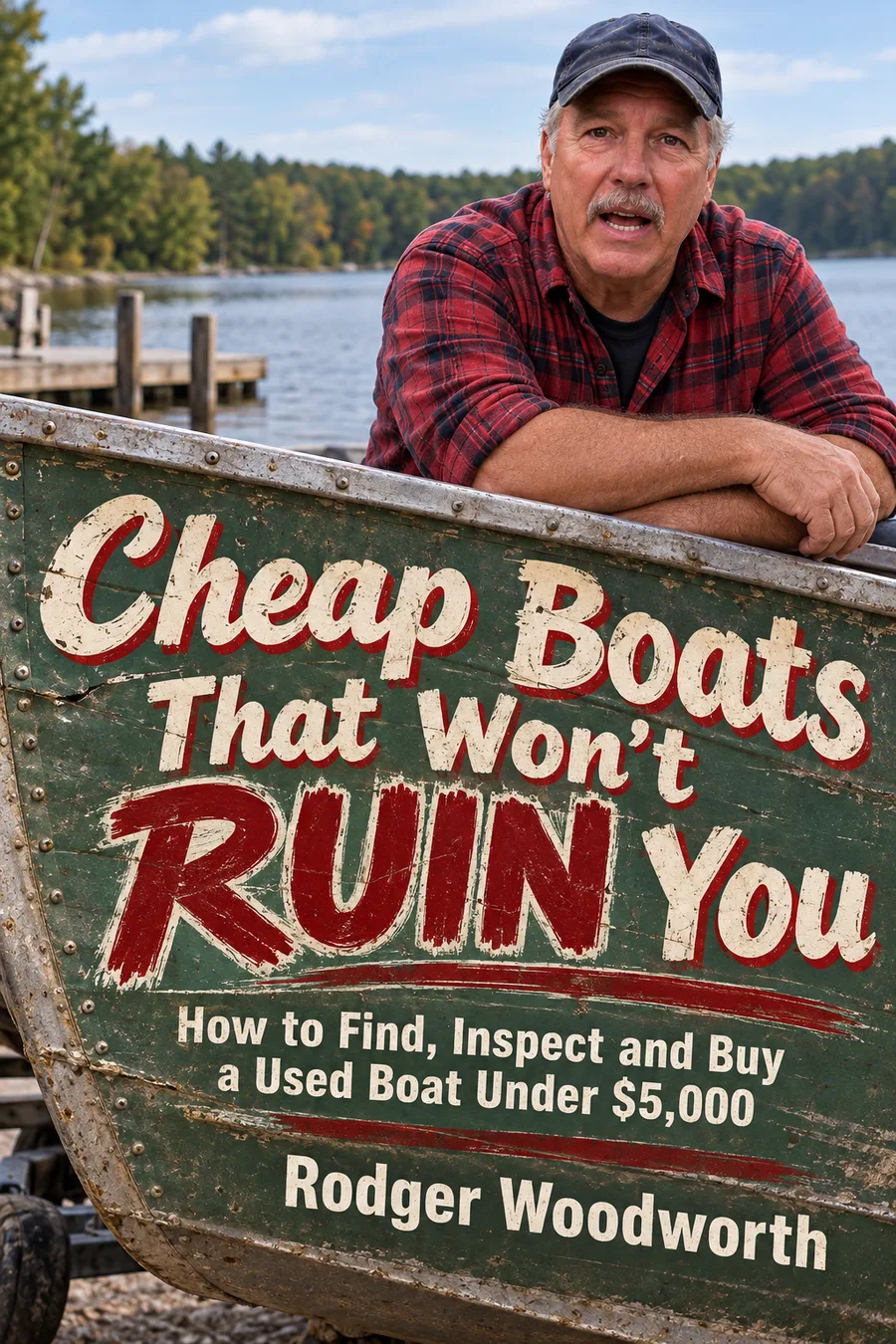
Cheap Boats That Won't RUIN You, by Rodger Woodworth
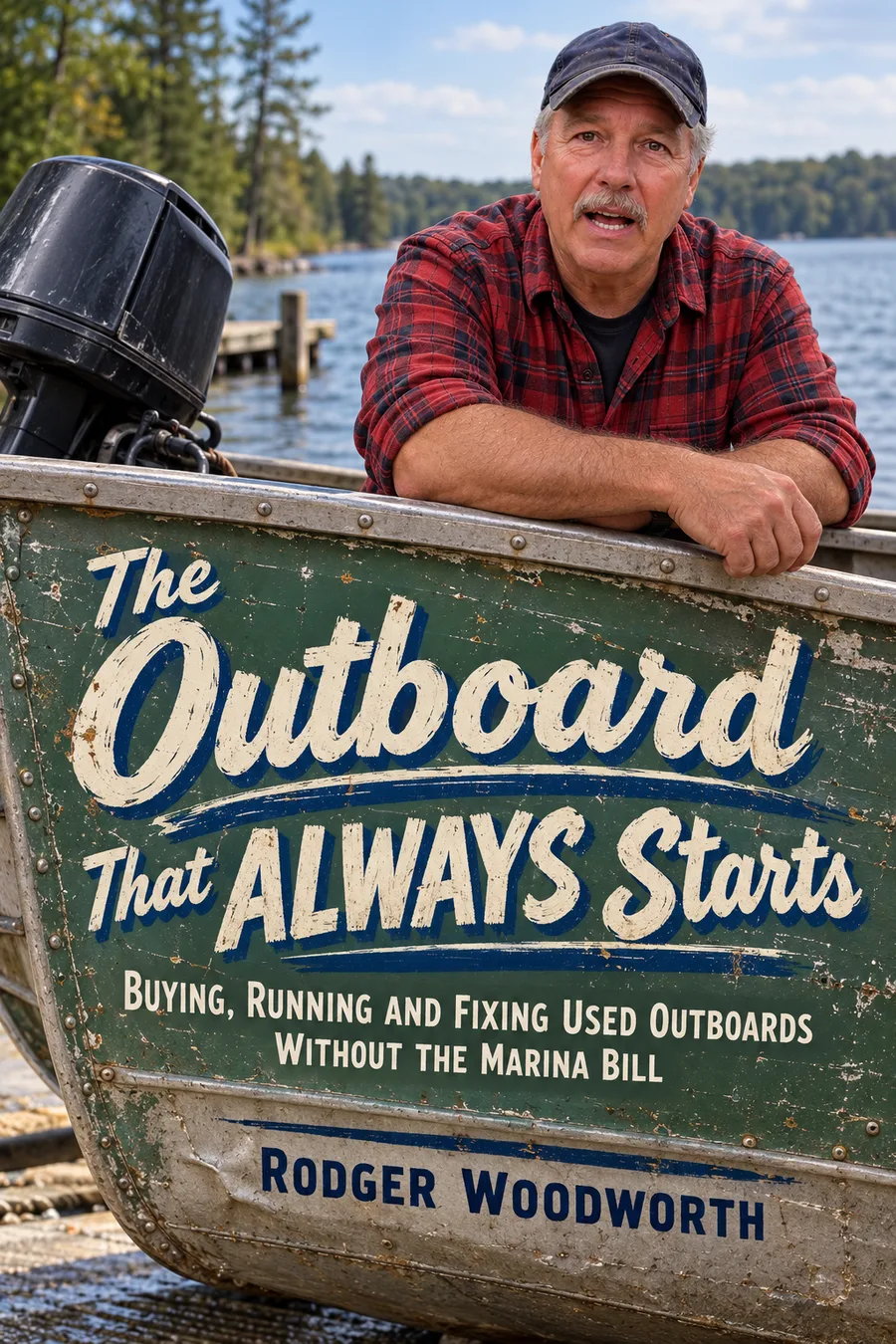
The Outboard That ALWAYS Starts, by Rodger Woodworth
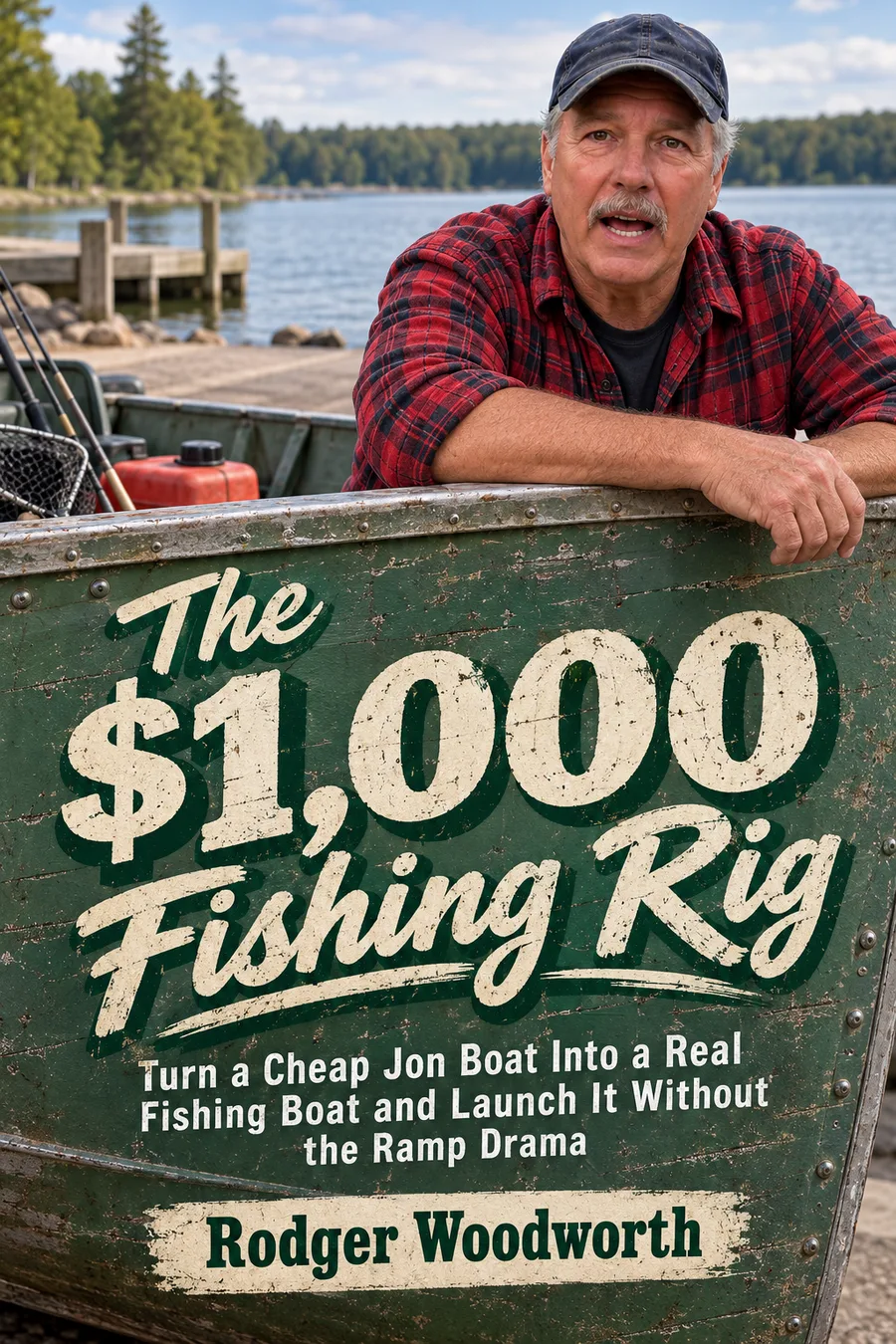
The $1,000 Fishing Rig, by Rodger Woodworth
Sound familiar

Most boat trouble starts before the boat gets wet

These are the moments I see over and over at the ramp and in driveways around the lake.

The price looks like a mistake in your favor.

And you can't tell whether you found a goldmine or the money pit the last owner wants gone.

You find the soft floor after the handshake.

A clean cover and bright paint hid a wet transom, a tired trailer and a motor that sat for years.

Everybody has a favorite brand.

Nobody tells you which motor makes sense for your lake, your budget and the shop you can actually reach.

It cranks, coughs and quits.

Right when six trucks are lined up behind you, and you don't know whether it's fuel, spark or the lanyard clip.

You want a casting deck on that jon boat.

But you've heard about people cutting out benches and foam and ending up with a boat that's heavy, wet and unsafe.

The ramp is why the boat stays home.

Backing the trailer, loading crooked, a forgotten drain plug. The stress costs you more days on the water than the weather.

None of that is a character flaw. It's missing instruction.

The books

Three books, one boat, in the order it happens

Buy it, keep it running, rig it and launch it. Each book picks up where the last one stops.

Cheap Boats That Won't RUIN You cover

Cheap Boats That Won't RUIN You

How to find, inspect and buy a used boat under $5,000

"A cheap boat is only cheap when the important parts are still sound."

I walk you through a used boat the way I'd walk it with you: the trailer and the ground under it first, then the hull, the floor, the transom, the motor's hours and the paperwork. You finish with a price you can defend and the nerve to walk away when the boat tells you to.

The Driveway HourPush the TransomThe Three-Bucket Price
Inside: 14 chapters
  1. The Cheap Boat Question
  2. Bring an Hour, Not a Hurry
  3. The Driveway Hour
  4. Read the Hull Before the Motor
  5. The Floor You Stand On
  6. Push the Transom
  7. Low Hours Can Mean Long Sitting
  8. Flooded, Sunk, or Simply Wet
  9. Choose the Hull for Your Water
  10. The Trailer Is Part of the Boat
  11. What the First Year Really Costs
  12. Paperwork Before Handshake
  13. The Three-Bucket Price
  14. Make the Offer or Leave

124 pages · PDF

The Outboard That ALWAYS Starts cover

The Outboard That ALWAYS Starts

Buying, running and fixing used outboards without the marina bill

"A motor does not know what brand is on its cowling. It knows whether you gave it clean fuel, cooling water, and a fair chance to start."

How to buy a used outboard without buying a mystery, how to pick the brand that belongs on your transom by who can service it near you, and the habits that keep it starting: fuel, cooling water, storage and a ten-minute check at home. When it does act up, you name the symptom and fix one thing at a time.

The Ten-Minute Pre-LaunchWhen It Cranks but Will Not StartWhat You Can Fix on Saturday
Inside: 12 chapters
  1. The Motor Is Only Half the Choice
  2. Two-Stroke, Four-Stroke, and the Motor You Can Live With
  3. Buying a Used Outboard Without Buying a Mystery
  4. Compression, Spark, and the Truth Under the Cowling
  5. Which Brand Belongs on Your Transom?
  6. Fuel Is Where Many Good Motors Go Bad
  7. The Ten-Minute Pre-Launch
  8. When It Cranks but Will Not Start
  9. Cooling Water, Oil, and the Small Jobs That Matter
  10. What You Can Fix on Saturday
  11. Storage Is Part of Starting
  12. A Breakdown Plan Makes a Single Motor Sensible

119 pages · PDF

The $1,000 Fishing Rig cover

The $1,000 Fishing Rig

Turn a cheap jon boat into a real fishing boat and launch it without the ramp drama

"A pretty deck will not keep you afloat. A sound hull, sound flotation, and a calm launch will."

Start with the boat you have and write the build sheet before you cut. Keep the flotation, build a floor that doesn't trap water, set the motor at the right height, wire every circuit for the water, and give the trailer a straight job. Then practice the ramp in the driveway so Saturday goes quietly.

Write the Build Sheet Before You CutDo Not Trade Flotation for Deck SpacePractice the Ramp Before Saturday
Inside: 12 chapters
  1. Start With the Boat You Have
  2. Write the Build Sheet Before You Cut
  3. Do Not Trade Flotation for Deck Space
  4. Plan a Deck That Can Come Back Out
  5. Build the Floor Without Trapping Water
  6. Make the Transom Earn Its Keep
  7. Set the Motor at the Right Height
  8. Wire Every Circuit for the Water
  9. Give the Trailer a Straight Job
  10. Practice the Ramp Before Saturday
  11. Load, Strap, and Leave the Lane
  12. Your First Full Day on the Water

127 pages · PDF

Why three books, not one

Before you payBook 1 checks the motor only far enough to decide: walk away, negotiate or call a mechanic.
Once it's yoursBook 2 owns the outboard: choosing, inspecting, running, fixing and storing it.
Making it a rigBook 3 owns the build and the ramp: floor, transom, motor height, wiring, trailer, launch.
Look inside

Plain pages you can take to the driveway

Short chapters, checklists, and the words a seller or a mechanic will use, explained the first time they show up.

Rodger Woodworth at the launch ramp
Who wrote these

I'm Rodger Woodworth

I live in a small lake town in the Upper Midwest. I've spent decades fishing bass tournaments, fixing trailer boats and working seasonal marina jobs, which means I've seen a lot of Saturdays go sideways at the ramp and a lot of good people buy the wrong boat for the right reasons.

Most boating problems can be prevented with patience, a few routine checks and somebody telling you plainly what to look at. That's what these books are. No brand cheerleading, no made-up reliability numbers, and when something is beyond a driveway fix, I say so and tell you who to call.

If you want your boat to start and your day to go right, we'll get along fine.

Rodger

What you get

  • Cheap Boats That Won't RUIN You, 124 pages: inspect and price a used boat under $5,000.
  • The Outboard That ALWAYS Starts, 119 pages: buy, run, fix and store a used outboard.
  • The $1,000 Fishing Rig, 127 pages: build a safe fishing rig from a jon boat and launch it calmly.
  • Instant download as PDFs. Read on a phone, tablet or laptop, or print them for the garage.
  • A copy of the download link goes to your email, so you can come back any time.
  • One payment. No subscription, no account to create.
The complete set

The Cheap Boat Trilogy

$27All 3 books
one payment
  • 3 PDF books, 370 pages, 38 chapters
  • Buy the boat, keep the motor starting, build the rig and launch it
  • Download right after payment, plus a copy of the link by email
Get the 3 books · $27
30-day money-back guarantee

30-day, 100% money-back guarantee. Read them. If they aren't for you, use the support form within 30 days and I refund the full amount. You keep the PDFs.

VisaMastercardAmexApple Pay

Already ordered and nothing turned up? Use the support form.

Questions

Before you buy

I've never owned a boat. Is this too advanced?

No. Book 1 is written for a first-time buyer and explains each term the first time it comes up, from transom to hull identification number. If you already own a boat, Books 2 and 3 are where you'll spend your time.

Do you tell me which brand of outboard to buy?

I tell you how to decide. Chapter 5 of Book 2, Which Brand Belongs on Your Transom?, weighs the motor against who can service it near you and what parts you can get. No brand cheerleading.

I already have a jon boat. Which book do I start with?

The $1,000 Fishing Rig. Start with the build sheet in Chapter 2 before you cut anything, then read The Outboard That ALWAYS Starts for the motor.

Do the books cover titles and registration?

Book 1 has a chapter, Paperwork Before Handshake, on what to check before money changes hands. Rules differ from state to state, so I point you to your own state for the legal side rather than pretending one answer fits everywhere.

How do I get the books?

Right after payment you land on a download page with all three PDFs. A copy of that link goes to your email too. They open on a phone, tablet or laptop, and they print fine.

Is this a subscription?

No. One payment of $27 for all three books. Nothing renews.

What if they're not for me?

Use the support form within 30 days and you get the full amount back. You keep the PDFs.

Will these replace a mechanic?

No, and they don't try. They help you do the checks and small jobs you can do yourself, and tell you plainly when a problem belongs with a qualified marine mechanic. Always follow your owner's manual and your boat's capacity plate.

Who is Rodger Woodworth?

A lake-town fisherman from the Upper Midwest who has spent decades fishing bass tournaments, fixing trailer boats and working seasonal marina jobs.
Go look at that next boat with a plan.

Get the 3 books · $27

Instant PDF download · 30-day money-back guarantee